
How Thrifting Made Me Stop Apologizing for My Budget

I want to tell you something I don't talk about much.
Growing up in College Park, I wore hand-me-downs. Every year. Every school year. I was the kid whose jeans came from someone else's closet, whose shoes were always a season behind, whose "new outfit" for picture day was still someone else's old outfit. My mama worked two jobs — I understood even then what that meant, what it cost her, what she was carrying. I wasn't resentful of her. I was resentful of the clothes.
Because clothes felt like proof. Like a label stitched right into the seam that said: you can't afford this. You're not worth new things.
I know that sounds dramatic now. But to a twelve-year-old who just wanted to walk into Westlake Middle School feeling normal? It was everything.
The Switch That Changed Everything
Then junior year of high school happened.
I found a pair of Levi's 501s at the Goodwill on Old National Highway — $4.99, high-waisted, just slightly cropped, in a wash that I had no idea was called "vintage" at the time. I just thought they were cute. I wore them with a white tee I had three of (also thrifted) and a denim jacket I'd picked up for $2. This is exactly the kind of Goodwill haul strategy that changed my entire approach to shopping.
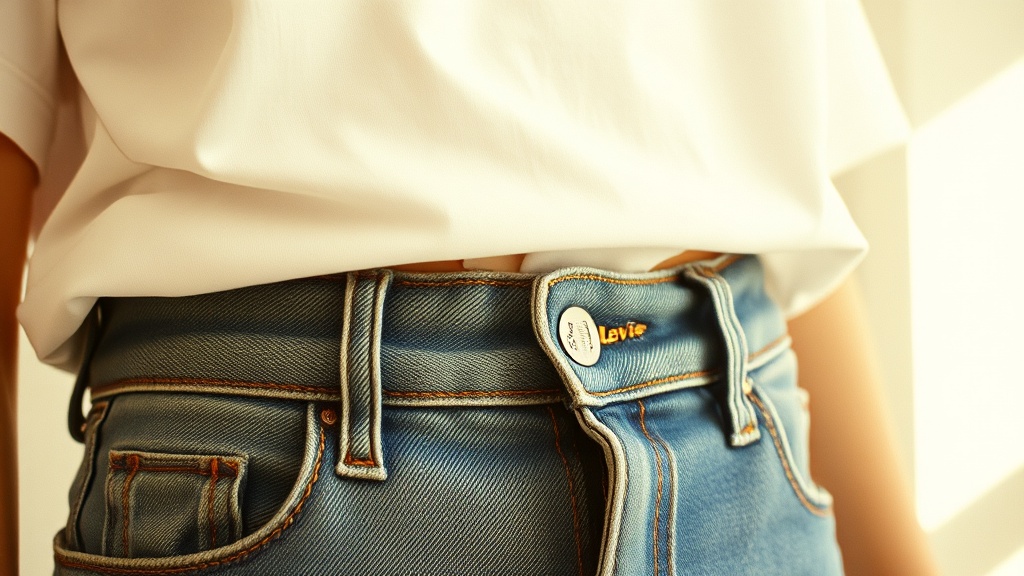
My friend Destiny stopped me in the hallway and said, "Where'd you get those jeans? Those are so good."
I almost lied. I almost said "oh just some boutique" or deflected into a subject change. But I was tired of the deflection, so I told her: Goodwill. Four dollars.
She looked at me like I'd just revealed a magic trick.
And something clicked for me. The shame was never about the clothes. It was about believing I needed to hide where I came from.
Those jeans were cool. I was cool. And I hadn't needed anyone's permission or anyone's paycheck to pull it off.
The Irony I Now Live In Daily
Here's the thing about what I do for work now: I'm a visual merchandiser at Nordstrom Rack. My entire job is to make a discount store look expensive. I know how to drape a rack so a $40 blazer looks like it belongs in a department store window. I know which hangers make clothes look intentional and which ones make them look discarded. I know the psychology of how clothes are presented — and how that presentation tells you what the store wants you to believe something is worth. It's the same skill that goes into making affordable pieces look like designer finds.
I go home from that job and I do the exact same thing for myself. On a $30 budget.
That's not sad. That's a skill. It's an actual, transferable, hard-won skill — and it took me years to stop treating it like a consolation prize.
When you know how fabric drapes, you can spot a quality wool coat at Goodwill from across the room. When you understand construction, you can see through the cheap topstitching on a "luxury" fast fashion piece and recognize that the thrifted blazer with the French seams is the better garment. I don't just thrift with taste — I thrift with information. And that is power.
What Thrifting Actually Taught Me About Money
Budget Style is not about being broke. I need to say that clearly, because I know that's the read some people have. Oh she thrifts because she has to.
Sometimes I do! I'm not going to pretend my 2019 Civic with the cracked windshield (I will fix it eventually, I promise) means I'm rolling in disposable income. But thrifting is now a choice I make — and that distinction matters more than I can explain.
When I walk into a party in a look that cost me $42 total and someone asks where my dress is from and I get to decide whether I tell them — that's autonomy. When I see a $400 dress from a brand I love and I think, I can build that look for $50, which means I keep $350 for rent, or savings, or literally anything else — that's agency. This is the same principle behind building a complete outfit for under $75.
International Women's Day is March 8th, and every brand on your timeline is going to post something about empowering women while selling you a $180 "feminist" tote bag. (I see the irony. I work in retail. I know exactly how this works.)
But here's what actually empowered me: learning that I didn't need anyone's markup to feel like myself.
Wearing a $400 outfit on a $50 budget doesn't mean I'm pretending. It means I'm not waiting — for the raise, for the promotion, for whoever I thought needed to give me permission to look the way I wanted to look. I stopped apologizing for my budget the day I stopped treating it like a limitation and started treating it like a constraint that makes me more creative, not less.
My Actual Thrift Process (Since You Asked)
Here's how I shop, since this is a how-to post and I'm not going to leave you with just the feelings:
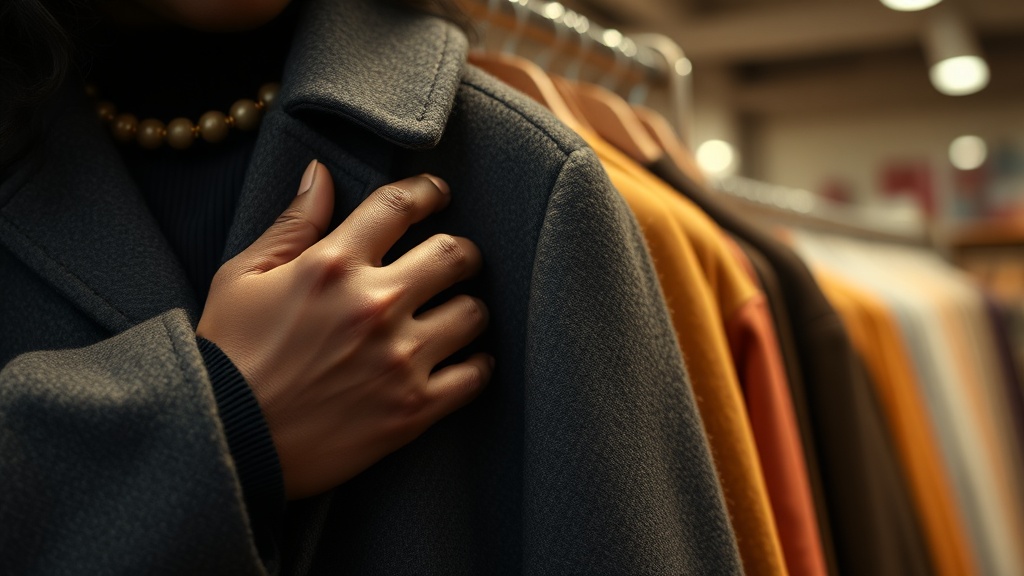
1. Go in with a silhouette in mind, not a specific item.
I'm not looking for "a blazer." I'm looking for "something structured that hits at the hip." That opens up the rack.
2. Touch everything before you look at anything.
Fabric weight tells you so much. Thin, slippery polyester — even though polyester itself is wash-durable — signals fast-fashion construction: the weave is loose, it'll pill and bag out after a few wears, and it never stops feeling cheap. Heavy cotton, wool, silk — those are built to last because of how they're made, not just what they're made of.
3. Check the construction, not the brand.
French seams (the kind where the raw edge is enclosed inside the seam) = quality. Flimsy serged edges that are already fraying = pass. The garment tells you the truth about itself if you know where to look.
4. Try everything on.
Even if you think you know your size. Vintage sizing is chaos. An "8" from 1992 is not an "8" from 2015. Try it on.
5. Ask: would I wear this without the $5 price tag?
This is the most important question. If the answer is yes, get it. If the answer is "probably, but it needs alterations I'll never do," leave it.
The Challenge (Yes, This Is an Assignment)
International Women's Day is March 8th. I want you to do one thing before then:
Find one thrifted piece that makes you feel powerful. Not "functional." Not "practical." Powerful. A blazer that makes you stand up straighter. A pair of heels you'd never pay full price for. A silk blouse that feels like a different version of yourself.
Spend under $20. Style it. Put it on. Walk somewhere in it.
Then notice how it feels to know you built that entirely on your own terms.
That's the story I wish someone had told twelve-year-old me. Not that secondhand was fine, not that you could "make it work" — but that the women who know how to find the good stuff in rooms everyone else walks past? They're the ones who know something the others don't.
I'm one of those women now. And if you want to master building elevated looks on a budget, I'm here to show you how.
You've got this. Now go find something that makes you feel like money.
— Keisha