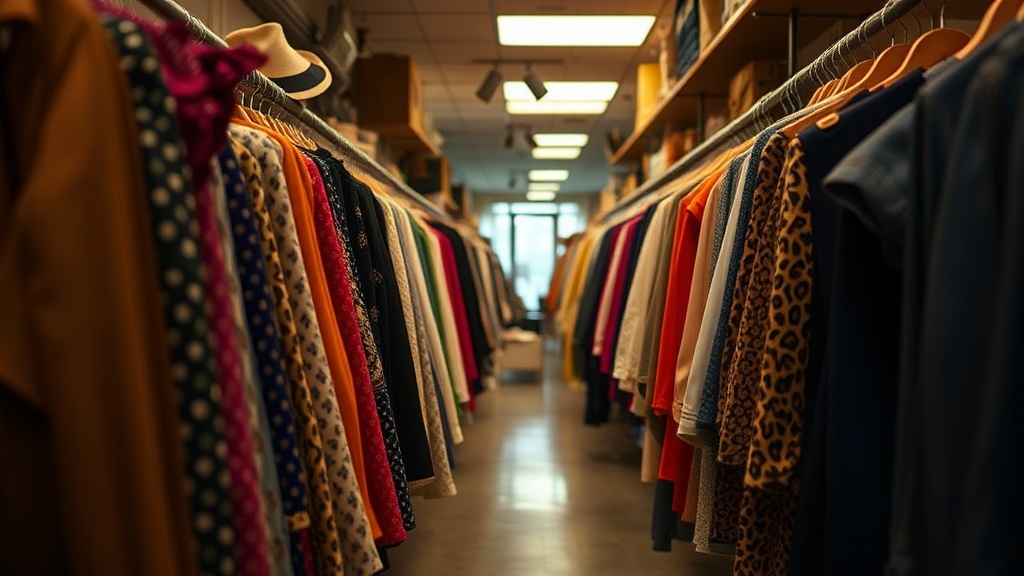
Where to Find Designer Pieces Hiding in Thrift Stores
You walk into Goodwill on a Saturday morning, coffee in hand, hoping to score something decent. Two aisles in, you see a rack of forgettable fast-fashion blazers and worn-out jeans. Most shoppers give up here—assuming the good stuff is gone. But the truth? Designer pieces hide in plain sight at thrift stores every single day. You just need to know exactly where to look, what to touch, and which sections everyone else ignores. This guide breaks down the insider techniques that professional thrifters use to build luxury-level wardrobes on ramen budgets.
Why Do Some Thrifters Always Find the Good Stuff?
The secret isn't luck—it's strategy. Regular thrifters who consistently walk out with $400 coats for $12 follow a predictable pattern. They shop on weekday mornings when new donations hit the floor. They check the men's section for oversized blazers (hello, borrowed-from-the-boys silhouette). They never skip the pajama rack, where silk camisoles hide among flannel sets. And most importantly—they know that thrift stores organize by color, not quality, which means a Max Mara wool coat sits right next to a polyester windbreaker if both happen to be navy blue.
Professional thrifters also understand the donation cycle. January brings post-holiday closet purges. May sees college students dumping barely-worn internship wardrobes. September? Divorce season—and suddenly someone's entire collection of designer workwear lands in the plus-size section (where straight-size shoppers never think to look). Timing matters as much as technique.
The psychology of thrifting also plays a role. Most shoppers grab the first "good enough" item they see. Successful thrifters practice strategic patience—they touch every single garment in their target sections, checking fabric content labels and construction details while others flip hangers impatiently. Quality leaves clues, but you have to slow down enough to notice them.
Which Sections Hide the Best Designer Finds?
Start with the coat and jacket section—outerwear carries the highest original price tags and lasts decades when well-made. Look for 100% wool, cashmere, real leather, and silk lining. Check the shoulder seams (should be finished, not raw edges) and look for working buttonholes (a dead giveaway of quality construction). The men's coat section deserves equal attention—an oversized wool overcoat works beautifully belted over a slip dress.
The lingerie and sleepwear racks contain hidden treasure. Silk blouses, silk charmeuse skirts, and cashmere robes regularly appear here, misfiled by volunteers who don't recognize luxury fabrics. Check for labels like Equipment, Vince, Eileen Fisher, and vintage designers. These pieces work layered under blazers or tucked into jeans—far more versatile than their "sleepwear" categorization suggests.
Shoes require careful inspection but reward the effort. Look for leather soles (not plastic), stitched construction (not glued), and recognizable hardware. Even worn designer shoes can be restored by a cobbler for less than the cost of new fast-fashion alternatives. Check the handbag section too—though picked over, genuine leather bags with classic silhouettes appear regularly. Avoid anything with heavy hardware tarnish or interior lining damage—that's rarely fixable.
The housewares section hides scarves, belts, and jewelry in glass cases or near the register. These accessories transform basic outfits and cost pennies compared to retail. A vintage silk scarf at $3 does the work of a statement necklace. A leather belt with quality hardware pulls together an entire look.
What Labels and Fabrics Should You Actually Look For?
Forget hunting for Chanel and Gucci—the real value hides in contemporary designers known for construction quality. Learn these names: Theory (impeccable suiting), Vince (luxury basics), Eileen Fisher (sustainable natural fibers), COS (minimalist architecture), Everlane (transparent pricing on quality materials), J.Crew Collection (the elevated line), Madewell (denim and leather), Club Monaco (classic tailoring), and Reformation (sustainable silk and linen).
Fabric content matters more than brand names. Memorize the hierarchy: silk, wool, cashmere, linen, cotton, leather, and quality viscose trump polyester, acrylic, nylon, and rayon every time. Touch everything—quality fabrics feel substantial, drape beautifully, and resist wrinkling. Hold the garment up to light—cheap fabrics look transparent or show uneven weaving. Check the care label—dry clean only often signals natural fibers worth the investment.
Construction details separate luxury from landfill. Look for French seams (enclosed raw edges), bound buttonholes, lined garments, working cuffs on blazers, pattern matching at seams, and heavy-duty zippers (YKK is the gold standard). These details indicate garments built to last through hundreds of wears—not dozens.
Size tags can mislead. Vintage sizing runs small. European sizing confuses American shoppers. Try everything—or learn to measure. Bring a soft tape measure and know your shoulder width, bust, waist, and preferred inseam. A perfect garment in the wrong size still won't work, but an oversized piece might become your favorite relaxed-fit treasure.
How Do You Fix Common Thrift Store Problems?
Stains aren't automatic dealbreakers—location determines salvageability. Underarm yellowing on silk? Dry cleaners can often remove it. Food stains on wool? Try a vinegar solution. But set-in oil stains or bleach spots? Walk away. Musty smells wash out with vinegar rinses or enzyme cleaners. That vintage smell everyone dreads? It fades with airing and proper cleaning.
Fit issues solve easier than you think. A too-large blazer becomes a boyfriend jacket. Wide-leg trousers transform into tailored shorts. Long sleeves get pushed up or cuffed. Most thrift stores offer alteration services at donation-based pricing—ask at the register. Minor repairs like loose buttons or fallen hems cost pennies to fix but drop prices significantly. A missing button on a $400 coat makes it $8—and you can buy matching buttons for $2.
Modernize dated pieces through styling. That shoulder-pad blazer works with vintage jeans and sneakers. The midi silk skirt pairs with a cropped tank and chunky boots. The conservative pumps look fresh with ankle socks and a mini dress. Context transforms everything—what looked stuffy in 1995 reads intentional and current when styled with modern pieces.
How Much Should You Actually Budget for Thrift Shopping?
Quality thrifting isn't free—it's cheap. Expect to spend $30-50 per trip for 3-5 quality pieces. Budget $5-15 per coat, $3-8 per blouse, and $2-5 for accessories. Compare to retail: that $12 wool coat replaces a $200 fast-fashion version that pills after three wears. Over a year, thrifting a professional wardrobe costs roughly $300 versus $2000+ buying new.
Location affects pricing significantly. Thrift stores in wealthy neighborhoods price higher but carry better inventory. Stores in college towns rotate quickly but require faster decision-making. Rural thrift stores often price lower but stock fewer designer pieces. Online thrifting through ThredUp or Poshmark offers curated selections at higher prices—but saves time and guarantees fit through return policies.
Build thrifting into your regular schedule rather than treating it as emergency shopping. Visit weekly for 20 minutes rather than monthly for three hours. Familiarity with the inventory rhythm helps you recognize new arrivals immediately. Keep a running list of wardrobe gaps (black trousers, silk blouse, camel coat) so you recognize the right piece when it appears—rather than buying random items that don't coordinate.
"The best-dressed women I know aren't the ones with unlimited budgets. They're the ones who know that a $400 coat feels exactly the same at $12—and they're patient enough to find it."
The thrill of thrifting isn't just the money saved—it's the hunt, the discovery, the story behind each piece. That vintage blazer might have attended board meetings in the eighties. The silk skirt could have celebrated someone's promotion. You're not just buying clothes; you're continuing narratives while writing your own. And doing it for the price of a few coffees? That's the real luxury.