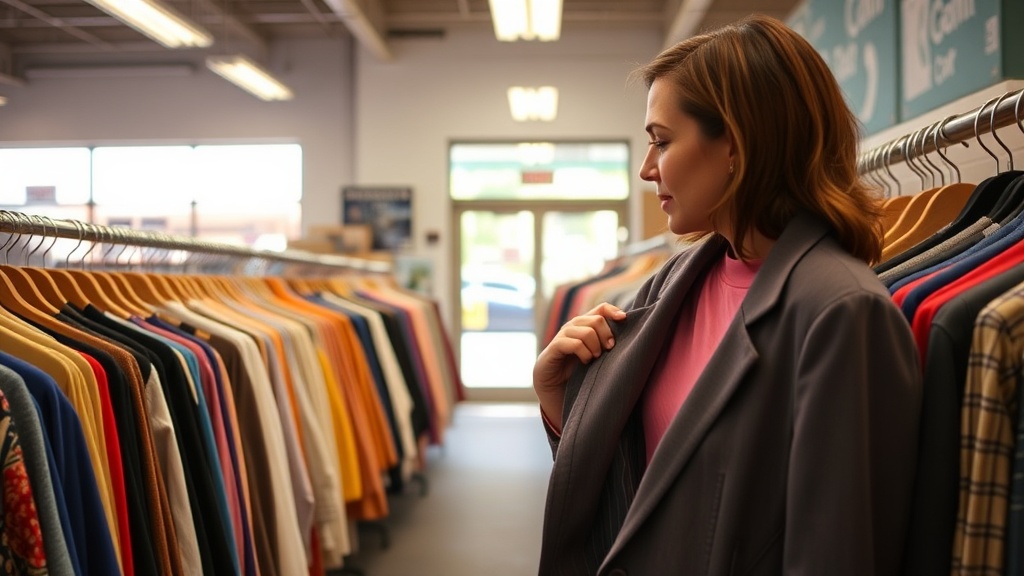
Thrift Store Strategy Guide: How I Find Designer Labels Every Single Time

People always ask me how I find such good stuff at Goodwill. They say things like "I went thrifting once and everything was junk" or "I never find anything in my size" or my personal favorite, "you must just be really lucky."
Baby, luck has nothing to do with it.
Thrifting is a skill. It's a system. And once you know the system, you will find good stuff every single time. Maybe not the exact thing you were looking for — thrifting doesn't work like that — but you WILL walk out with something worth wearing.
I've been thrifting seriously for about six years now. What started as a broke-college-student necessity turned into a genuine obsession and now it's basically a personality trait. I've found Theory, Equipment, Vince, Eileen Fisher, Coach, Kate Spade, Banana Republic, J.Crew cashmere, and more.
Here's everything I know.
Rule #1: Location Is Everything
I'm gonna say this as plainly as I can: thrift stores in wealthy neighborhoods have better donations.
This isn't snobbery. It's logistics. When someone who lives in a $1.5M Buckhead condo cleans out their closet, those clothes go to the nearest Goodwill. That Goodwill is the one on Piedmont Road. That's where I shop.
In Atlanta specifically, here are my top locations ranked:
- Goodwill Buckhead (Piedmont Rd) — My #1. Best designer finds, consistent quality. This is where the Theory blazer came from.
- Goodwill Decatur (North Decatur Rd) — Surprisingly good. Emory professors and Decatur families donate quality stuff.
- Salvation Army Virginia-Highland — Smaller selection but less picked over. Good for shoes and accessories.
- Buffalo Exchange Little Five Points — Not technically thrift (it's consignment) but their reject rack outside is basically free thrifting.
Avoid locations near college campuses if you're looking for quality over quantity. You'll find plenty of stuff but it's mostly fast fashion that's been through the wash fifty times.
Rule #2: Timing Matters More Than You Think
Every thrift store has a restocking schedule and learning yours is the single biggest advantage you can have.
At the Buckhead Goodwill:
- New stock hits the floor: Friday afternoon and Saturday morning
- Best time to go: Saturday between 9-11 AM
- Worst time: Sunday afternoon (picked over)
- Secret weapon: Tuesday mornings — fewer shoppers, and weekend donations have been processed
I asked one of the staff members about their schedule and she was happy to tell me. Most employees will answer if you just ask nicely. You'd be amazed how many thrifters never think to ask.
Rule #3: Touch Everything, Read Every Label
Here's where most people go wrong: they browse thrift stores like they browse Target. Standing back, scanning with their eyes, grabbing things that catch their attention visually.
No. That's not how this works.
At a thrift store, you need to physically touch and flip through every single item on the rack. Yes, every one. In your size section at minimum. Here's why:
- Designer pieces often look boring on the hanger. A Theory blazer doesn't scream "LOOK AT ME" from the rack. It's just a black blazer.
- The LABEL is how you identify quality. You can't read a label from three feet away.
- Fabric feel tells you more than visual appearance. Quality wool, silk, and cashmere feel different than polyester blends. Train your fingers.
My process: I start at one end of my size section and flip through every hanger. I'm feeling the fabric between my thumb and forefinger. If it feels nice, I check the label. If the label is good, I pull it out and inspect.
This takes 20-30 minutes per section. Yes, it's slow. Yes, it's how you find an $11 Theory blazer.
Rule #4: Know Your Labels
You don't need to memorize every designer brand. You need to know the tiers so you can make quick decisions.
Always grab (check fit and condition, but these are almost always worth it):
- Theory, Vince, Equipment, Eileen Fisher, Ted Baker
- J.Crew Collection (NOT regular J.Crew Factory — check the label carefully)
- Brooks Brothers, Hugo Boss, Max Mara
- Any real cashmere, silk, or wool piece regardless of brand
Worth checking (good quality, good resale if it doesn't fit you):
- Banana Republic (especially the older stuff — heavier fabric)
- Ann Taylor (their suiting is genuinely good)
- COS, & Other Stories, Massimo Dutti
- Coach, Kate Spade, Dooney & Bourke (bags/accessories)
Skip (available new for the same price or less):
- H&M, Forever 21, Shein, Fashion Nova
- Old Navy (unless it's basically brand new)
- Worn-out fast fashion of any kind — no amount of cheap is worth pilled, stretched-out polyester
Rule #5: The Inspection Checklist
Before anything goes in my cart, it passes this inspection:
- Seams: Run your hand along every seam. Feel for pulls, holes, or weak spots.
- Fabric: Check for pilling (fixable with a shaver), stains (usually NOT fixable on silk), or fading.
- Armpits: I'm sorry but you HAVE to check. Deodorant stains, yellowing, and odor live here. Especially on silk and white items.
- Zippers and buttons: Test every zipper. Count the buttons. Missing buttons are fixable; broken zippers usually aren't worth the hassle.
- Smell: Give it a subtle sniff. Musty is fine (it'll wash out). Smoke or mildew? Put it back.
- Lining: If it has a lining, check that too. Torn linings are expensive to repair.
This takes about 30 seconds per item. It will save you from buying something you'll never wear.
Rule #6: Know What's Fixable vs. What's a Dealbreaker
Easy fixes (buy it):
- Missing button (keep a button jar at home — takes 5 minutes)
- Minor pilling (fabric shaver, $12 on Amazon)
- Needs hemming (tailor charges $8-15)
- Slightly too big (a tailor can take things in cheaply)
- Wrinkled (obviously)
Dealbreakers (put it back):
- Stains on silk or satin (almost impossible to remove without damage)
- Broken zipper (replacement costs $15-25 at a tailor — often more than the item)
- Too small (you can't add fabric)
- Cracked leather or peeling faux leather
- Strong odor that isn't just mustiness
Rule #7: Set a Budget and a Timer
This is the discipline part. I give myself:
- $40 maximum per trip
- 90 minutes maximum in the store
Without limits, thrifting turns into hoarding. I've been there. I once came home with 14 items and wore exactly 3 of them. The rest sat in my closet with tags still on for six months before I donated them BACK to Goodwill. The circle of thrift.
Now I ask myself one question before I buy: "Will I wear this in the next two weeks?" Not "could I theoretically style this." Will I ACTUALLY wear it. If the answer isn't a clear yes, it stays on the rack.
Rule #8: Build Relationships
I know the staff at Buckhead Goodwill by name. Not because I'm networking — because I'm there every Saturday and I'm not rude to them.
Benefits of being a regular:
- They'll tell you when new stock is coming out
- They'll sometimes hold something behind the counter if they think of you
- They'll tip you off about sale days
- It's just nice to be nice to people who work hard
My Secret Weapons
Three tools I never thrift without:
My phone with Google Lens. If I find a label I don't recognize, I take a photo and Google Lens identifies it instantly. This has helped me catch brands I would've walked past.
A fabric shaver ($11.99 on Amazon). Turns pilled cashmere back into smooth cashmere. Pays for itself on the first use.
A reusable shopping bag. Goodwill bags are flimsy. Bring your own so you're not juggling a splitting plastic bag through the parking lot.
Thrifting isn't luck. It's showing up consistently, knowing what to look for, and being patient enough to flip through every hanger. Do that and you'll find designer labels every single time.
See y'all at Buckhead Goodwill on Saturday. I'll be in the blazer section.