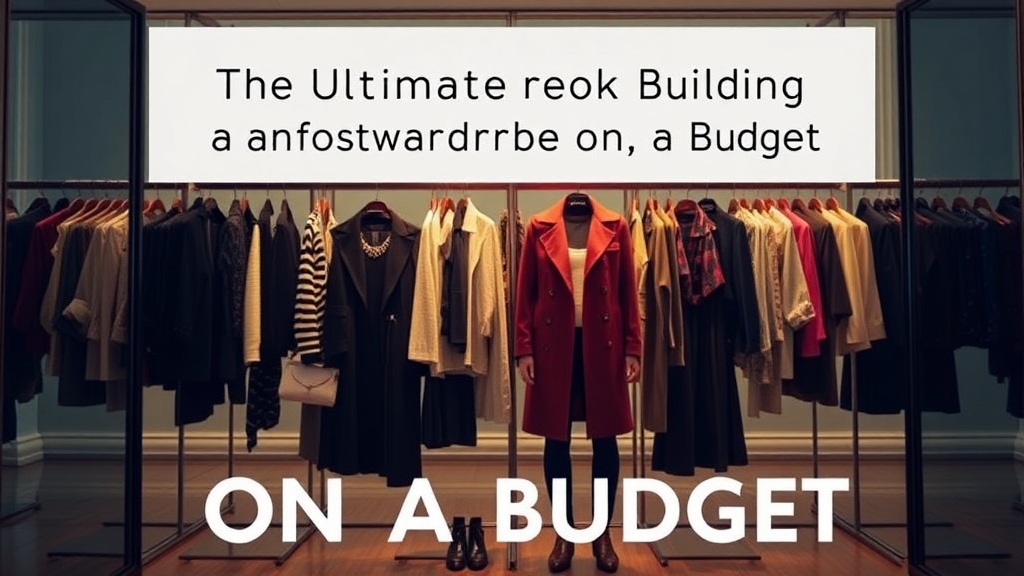
The Ultimate Guide to Building a Capsule Wardrobe on a Budget

A capsule wardrobe strips fashion down to the bones—fewer pieces, infinite combinations. This guide walks through exactly what to buy, where to find it for under $30 per item, and how to mix pieces so mornings stop feeling like a battle. Whether working with a studio apartment closet or just tired of the "nothing to wear" spiral, these strategies come straight from the fitting room floor at Nordstrom Rack.
What Is a Capsule Wardrobe and Why Does It Actually Work?
A capsule wardrobe is a curated collection of 25-35 interchangeable clothing items that work together. The concept originated in the 1970s with London boutique owner Susie Faux, but it's having a major moment now—especially among shoppers tired of fast fashion's burnout cycle.
Here's the thing: most people wear 20% of their clothes 80% of the time. A capsule wardrobe simply acknowledges that reality and designs around it. Instead of 100 mediocre pieces, you own 30 great ones. Each item earns its real estate.
The financial upside? Dramatic. The average American spends about $1,800 annually on apparel according to the Bureau of Labor Statistics. Capsule devotees often cut that by half—while looking more put-together.
The Foundation Pieces (The Non-Negotiables)
Every capsule starts with a neutral base. Think of these as the canvas—boring alone, brilliant together.
- White crewneck tee: The Uniqlo U Crew Neck Short-Sleeve T-Shirt ($14.90) holds its shape wash after wash.
- Black fitted tee: Alternative Apparel's basic tee often hits clearance at TJ Maxx for $12-15.
- Striped Breton shirt: A Saint James original runs $100+, but Who What Wear at Target makes a dead ringer for $24.99.
- White button-down: H&M's cotton poplin version ($17.99) outperforms shirts triple its price.
- Black turtleneck: Old Navy's jersey turtleneck ($15) layers like a dream.
Worth noting: these aren't placeholders. These are workhorses. The white tee goes under blazers, stands alone with jeans, tucks into skirts. Buy quality at entry-level prices, not disposable garbage that pills after three washes.
How Many Pieces Should a Budget Capsule Wardrobe Actually Include?
Thirty pieces. That's the sweet spot—enough variety to avoid boredom, few enough that everything gets worn. This includes tops, bottoms, dresses, outerwear, and shoes. It does not include underwear, workout gear, or that one Halloween costume in the back.
The catch? Those 30 pieces need to play nicely together. That means sticking to a cohesive color palette. Most budget capsules succeed with:
- 60% neutrals (black, white, navy, gray, camel, olive)
- 30% complementary colors (burgundy, mustard, dusty blue)
- 10% accent pieces (patterns, statement items)
This ratio prevents the "closet full of orphans" problem—where every item looks great alone but matches absolutely nothing else you own.
Building Your Bottom Half
Pants and skirts carry more visual weight than tops. They anchor outfits. Spend strategically here.
| Item | Budget Pick | Price | Why It Works |
|---|---|---|---|
| Dark wash skinny jeans | Old Navy Mid-Rise Rockstar | $25-35 | Holds shape, multiple washes available |
| Black straight-leg trousers | Uniqlo Smart Ankle Pants | $29.90 | Office-appropriate, machine washable |
| Medium wash boyfriend jeans | Target Universal Thread | $22.99 | Relaxed fit, weekend staple |
| Pleated midi skirt | ASOS Design | $19-26 | Dresses up or down |
| Black pencil skirt | H&M | $12.99 | Classic silhouette, endless versatility |
That said—fit trumps everything. A $15 pair of pants that fits perfectly beats a $150 pair that gaps at the waist. Budget shopping demands patience in the fitting room. Try everything. Sit down. Bend over. Raise your arms. If it passes those tests, it's a contender.
Where Can You Find Quality Capsule Pieces for Under $30?
The obvious answer—thrift stores, sample sales, and strategic clearance hunting. But let's get specific about where the gems actually hide.
The Rack (Nordstrom Rack): End-of-season shipments arrive monthly. The best deals hit on Tuesday mornings. Look for Nordstrom's house brands like Halogen and BP—quality construction at 60% off original prices. A $28 Halogen blouse was originally $89.
ThredUp: The online consignment giant carries barely-worn J.Crew, Madewell, and Banana Republic for 70-90% off retail. Filter by "New with Tags" for untouched pieces.
Uniqlo: Japanese basics giant with ethical manufacturing and prices that start at $5.90. Their heattech line revolutionizes winter layering without bulk.
Target: The Universal Thread and A New Day lines have upped their game dramatically. Target's push into improved basics means $25 jeans that rival department store versions.
Poshmark: Individual sellers list used and new clothing. Bundle multiple items from one seller for shipping discounts. Real finds: Everlane for $20, vintage Levi's for $25.
The Outerwear Equation
Coats eat budgets alive. One quality jacket costs what ten tees do. Here's how to cheat the system:
Buy vintage. Wool coats from the 1970s and 80s were constructed better than most modern versions. Thrift stores in affluent neighborhoods—think the suburbs outside major cities—often have $15-25 wool coats that originally cost $400+. Look for union labels (ILGWU tags indicate vintage American manufacturing) and check armpits for staining before buying.
Your capsule needs exactly three outerwear pieces:
- The structured blazer: Thrift a vintage wool version or grab Zara's basic blazer on sale ($35-40—slightly over budget but worth the stretch).
- The trench coat: London Fog outlet stores clear last season's stock at $29-39. Wait for the extra 40% off sales.
- The casual layer: A denim jacket (Levi's outlets, $30) or utility jacket (Old Navy, $25) adds texture to any outfit.
Shoes: The Quality Temptation
Footwear demands honesty. Cheap shoes hurt. They fall apart. They make that embarrassing squelching sound.
Here's the compromise: buy two pairs of quality shoes per season and rotate religiously. That means:
- White leather sneakers: Keds Champion Leather ($45-50) often hits 40% off—bringing them to $30. Classic, clean, comfortable.
- Black ankle boots: Target's Universal Thread line ($29.99) lasts one to two seasons of heavy wear. Acceptable ROI.
- Nude ballet flats: Amazon Essentials makes a surprisingly decent version for $20.
- Strappy sandals: Old Navy, $15. Trends change fast—don't overinvest.
The real secret? Shoe repair. A $15 resole extends a $30 boot's life by two years. Find a local cobbler (yes, they still exist) and make friends.
What About Accessories—Do They Count in the 30 Pieces?
Accessories don't count toward the 30-piece limit. That's why they're dangerous—and brilliant. One scarf transforms five outfits. A belt changes a silhouette entirely.
Build a small but mighty accessory arsenal:
- Leather belt: Madewell often clearance-colors their classic belt for $28.
- Silk scarf: Thrift stores are goldmines. $4-8 for authentic vintage silk.
- Minimal gold jewelry: Mejuri's demi-fine pieces start at $35, but Amazon's Pavoi line delivers similar aesthetics at $12-15.
- Structured tote: Everlane's Day Market Tote ($30 on sale) carries laptops, groceries, and dignity.
- Crossbody bag: Target's A New Day line, $22. Holds phone, wallet, keys, lipstick.
Accessories are where personal style shines. The capsule provides the foundation; accessories provide the flair. A $4 thrifted scarf makes a $15 H&M tee look intentional.
The Maintenance Ritual
Budget wardrobes require care. Fast fashion falls apart faster—that's physics. But treated gently, even inexpensive pieces last years.
Wash in cold water. Always. Hot water degrades fibers and fades dyes. Hang dry when possible—dryers are fabric murderers. Invest in a $8 fabric shaver to remove pilling and refresh garments instantly. Store sweaters folded, not hung (gravity stretches them into sad, elongated versions of themselves).
Learn basic repairs. Sewing on a button takes four minutes. Fixing a hem takes ten. YouTube tutorials cover everything—no grandmother required.
The Outfit Formula That Never Fails
Staring at the closet, brain empty, coffee cold? Use this:
One fitted piece + one loose piece + one structured piece = polished outfit
Fitted tee + wide-leg trousers + blazer. Fitted turtleneck + boyfriend jeans + trench coat. Fitted dress + oversized cardigan + ankle boots. The proportions create visual interest automatically. No thought required.
That formula generates at least 100 unique combinations from a 30-piece wardrobe. Math works in your favor here.
Building a capsule wardrobe on a budget isn't about deprivation—it's about decision. Choosing quality over quantity. Choosing pieces that work harder. Choosing to look like money without spending it. Start with the foundation. Add slowly. Edit ruthlessly. The closet (and the bank account) will thank you.