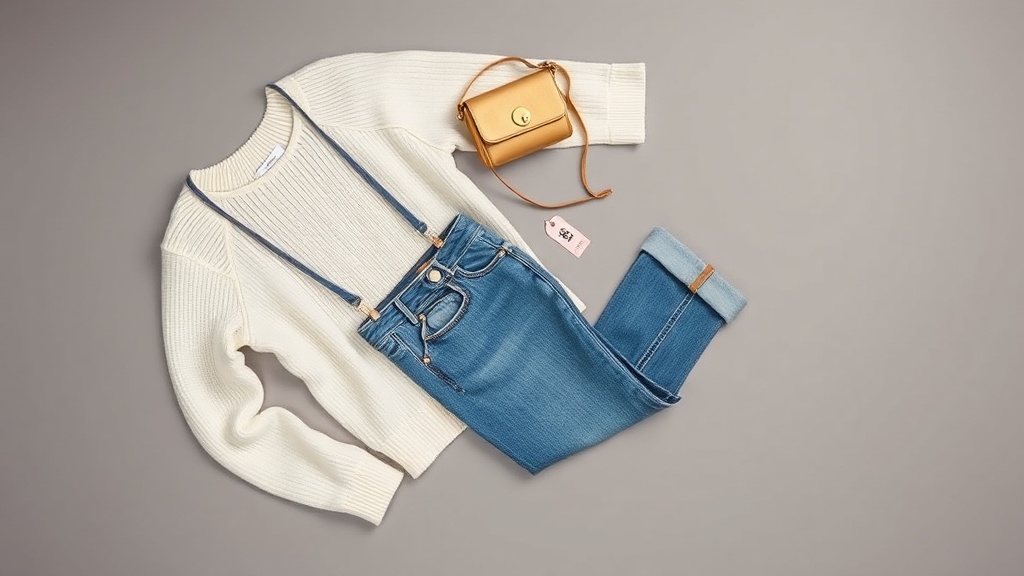
My Exact Goodwill Strategy: How I Find $168 Sweaters for $6

Okay babe, quick answer first: I find the good stuff by treating Goodwill like a system, not a treasure hunt.
I wear a try-on outfit, hit one rich-area store plus one random store, scan by fabric before size, and purge my cart hard before checkout. That's how I found a Helmut Lang sweater marked around $168 retail for $6, and vintage Levi's for $4.
If you've been searching how to thrift clothes and getting generic "just be patient" advice, this is the no-BS version I use every Saturday in Atlanta.
Also yes, timing matters right now. thredUP's 2025 Resale Report says the U.S. secondhand apparel market grew 14% in 2024 (its strongest growth since 2021), and ACI's 2025 survey says 80% of Americans plan to spring clean. More closet clean-outs usually means better thrift racks.
What should you wear to thrift so try-ons are fast?
My thrift uniform is always:
- Bike shorts
- Tight tank
- Slip-on shoes
- Crossbody bag
Why this works: if fitting rooms are packed (or closed), you can try pants, skirts, and jackets over your base layer in like 10 seconds. No wrestling with jeans in a tiny stall, no wasting half your morning.
This one habit saves me at least 30-45 minutes per trip.
Which Goodwill locations are actually worth it?
I run the 2-store rule:
- Store 1: near a wealthy neighborhood (better labels, better fabric, more "worn once" donations)
- Store 2: middle-of-nowhere location (less competition, more overlooked gems)
People only do one type and wonder why they strike out.
The rich-area stores are where you find better brands.
The random stores are where those better brands are still sitting there at 10:15 a.m. because nobody dug through that rack yet.
If I only have time for one stop, I still choose based on what I need:
- Need quality blazers/coats/sweaters? Wealthier-area location.
- Need denim, tees, basics, and weirdly good men's sweaters? Random location.
How do I scan racks without spending 3 hours in-store?
I do color first, fabric second, size last.
Most people do size first and miss half the good stuff. I ignore the size tab, then scan by color blocks:
- Neutrals first: black, cream, camel, navy, white
- Then rich solids: olive, burgundy, chocolate
- Prints last (most are chaos, some are gold)
After that, I do the touch test.
The touch test (my non-negotiable)
I reach for natural fibers first:
- Cotton
- Linen
- Wool
- Cashmere
- Silk
If it feels crunchy, plasticky, weirdly shiny, or paper-thin in a bad way, I put it back.
Real talk: if it already looks tired on the hanger, it will look tired on you. No styling hack can save bad fabric.
What is the cart purge and why does it save money?
This is the step that keeps your closet clean and your bank account sane.
I put every maybe-item in my cart, finish one full lap, then I park the cart and do a hard purge before checkout.
I ask 4 questions:
- Would I wear this in the next 2 weeks?
- Can I style this with at least 3 things I already own?
- Does it upgrade at least one outfit I wear often?
- Am I buying this because I love it, or because it's "only $5"?
If it's not a clear yes, it goes back.
"Cheap" and "worth it" are not the same thing. That lesson alone changed my wardrobe.
What do I check for damage before I pay?
I do a 60-second quality check:
- Underarms (stains/deodorant buildup)
- Collar and cuffs
- Pilling at side seams
- Missing buttons
- Broken zippers
- Hems pulling loose
If it's a 5-minute fix, fine.
If it's permanent damage or a weird stretched shape, hard pass.
My exact 90-minute Goodwill route
If you want my literal Saturday timeline:
- 8:00-8:20: sweaters, blazers, outerwear
- 8:20-8:40: denim and trousers
- 8:40-8:55: dresses and skirts
- 8:55-9:10: shoes and bags
- 9:10-9:25: try-on and cart purge
- 9:25-9:30: damage check and checkout
Order matters. The highest-value categories go first, because those are the first sections to get picked over.
Does this strategy actually work? Yes. Here are my real finds.
From my own closet:
- Helmut Lang sweater: paid $6 (tagged around $168 when new)
- Vintage Levi's: paid $4
- Structured black blazer: thrifted hero piece that made a Target tank look way more expensive
- Camel coat: thrift find I used in one of my under-$75 outfit formulas
I'm not saying every trip is perfect. I'm saying this system gives you way better odds than wandering aisle to aisle hoping for a miracle.
Quick body-type notes (because we dress real bodies here)
I'm 5'6", size 10, with hips. Here's what works for me and my readers:
- Curvier hips/thighs: start with high-rise straight or wide-leg denim
- Fuller bust: open blazers + V-necks usually balance better than stiff crew necks
- Petite: prioritize shoulder fit in jackets, then hem the pants later
Ignore thrift size labels. They are chaos. Fit and fabric are the truth.
FAQ: Goodwill thrift tips people ask me every week
What day is best to thrift?
Saturday morning still wins for me because I can hit two stores early before the racks get picked through.
Should I shop by size first?
No. Scan by color and fabric first, then check size. You'll find way more quality pieces.
How many pieces should I buy in one trip?
Usually 3-5 good pieces max. If you leave with 20 "okay" pieces, you'll wear maybe 2.
Save this for your next run, and if you want it, I'll drop my printable in-store yes/no thrift checklist next.
This post contains affiliate links. If you shop through these links, I may earn a small commission at no extra cost to you. I only link things I'd actually wear.
Data notes (checked March 5, 2026):
- thredUP 2025 Resale Report / newsroom: U.S. secondhand apparel market grew 14% in 2024; projected to reach $74B by 2029.
- American Cleaning Institute 2025 Spring Cleaning Survey: 80% of Americans planned to do some spring cleaning.