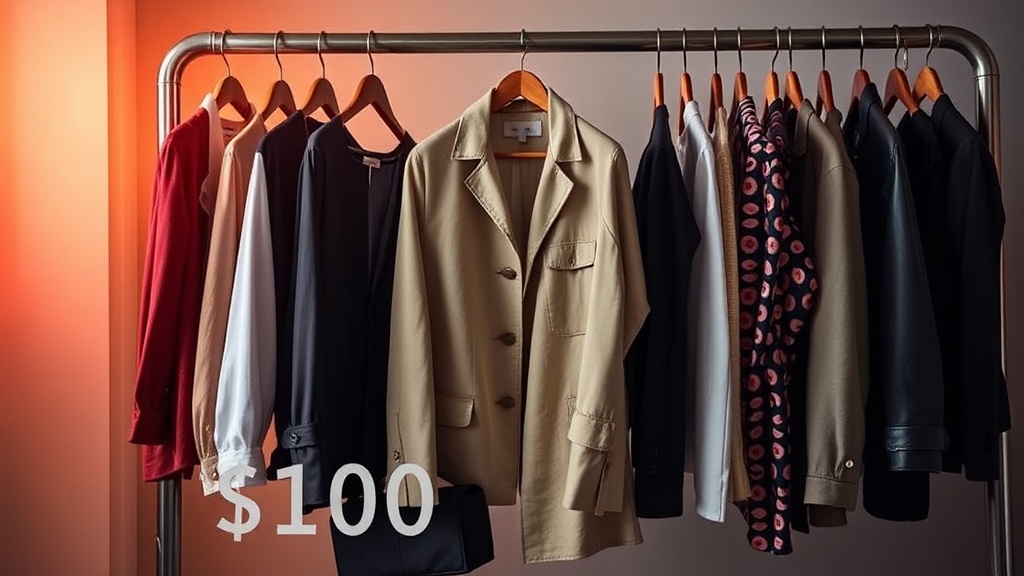
How to Build a Capsule Wardrobe on a $200 Budget

Building a complete capsule wardrobe for $200 isn't just possible—it's a blueprint for getting dressed without stress. This guide breaks down exactly which pieces to buy, where to find them, and how to mix them into dozens of outfits. You'll walk away with a shopping list, real store recommendations, and styling tricks that make budget pieces look expensive.
What Exactly Is a Capsule Wardrobe?
A capsule wardrobe is a curated collection of 15-30 versatile pieces that work together interchangeably. Think of it as a closet where everything matches—neutral bottoms pair with every top, shoes work across multiple occasions, and accessories pull looks together without clutter.
The concept dates back to the 1970s (credited to London boutique owner Susie Faux), but it's having a major moment now. Why? Because fast fashion fatigue is real. A capsule approach means fewer decisions, less waste, and outfits that actually make sense for real life.
Here's the thing: capsule wardrobes get misrepresented as boring beige uniforms. They don't have to be. A smart capsule includes one or two statement pieces—maybe a red silk blouse or leopard flats—that inject personality without breaking the cohesion.
What Are the Best Affordable Stores for Building a Capsule Wardrobe?
Target, Uniqlo, H&M, and Old Navy offer the best balance of quality, price, and classic styling for capsule building. Each has distinct strengths—Uniqlo for elevated basics, Target for trend-forward pieces, H&M for workwear, and Old Navy for denim and casual staples.
Let's break down where your $200 goes furthest:
| Store | Best For | Price Range | Quality Notes |
|---|---|---|---|
| Uniqlo | T-shirts, trousers, cashmere blends | $15-$50 | Japanese minimalism, holds up in wash |
| Target (A New Day) | Trend pieces, accessories | $10-$35 | Surprisingly chic for the price point |
| H&M | Blazers, button-downs | $13-$40 | Check labels—some items last, others don't |
| Old Navy | Jeans, cardigans | $15-$45 | Wait for the 40% off sales—always happening |
| Thrift Stores (Goodwill, Savers) | Leather goods, vintage denim | $5-$15 | Hit-or-miss, but the hits are spectacular |
Worth noting: Uniqlo's Airism line has become a cult favorite for breathable, layer-friendly basics that look significantly more expensive than their $15 price tags. The fit is streamlined without being tight—ideal for capsule building.
The catch? Fast fashion requires inspection. Before buying, check seams (should be finished, not raw), fabric weight (hold it up to light—thin means short lifespan), and hardware (zippers should glide smoothly). Five extra seconds in the store saves a disappointing purchase.
Which 10 Pieces Should You Buy With $200?
Start with these ten pieces: white tee, striped tee, black trousers, medium-wash jeans, black blazer, beige cardigan, white sneakers, black ankle boots, a crossbody bag, and gold hoops. This combination yields over 40 outfit combinations.
Here's exactly how to allocate that budget:
- White Crew-Neck T-Shirt — Uniqlo U Crew Neck, $15. The slightly heavier cotton drapes like designer. Size up for a relaxed fit that tucks cleanly.
- Striped Breton Tee — Target A New Day, $12. Navy and white stripes read "French girl" without the Paris price tag.
- Black Straight-Leg Trousers — H&M, $25. Look for the "Slim Fit" style with a touch of stretch. The waistband should sit at your natural waist.
- Medium-Wash Straight Jeans — Old Navy, $30 (on sale). The "Wow Straight" cut flatters most body types. Avoid distressing—it limits versatility.
- Black Unstructured Blazer — H&M, $35. Skip the shoulder pads here. A soft, slightly oversized blazer works for the office and weekend brunch.
- Beige or Camel Cardigan — Target, $22. The duster length doubles as a jacket in transitional weather. Warm neutrals pair with everything.
- White Leather Sneakers — Keds Champion, $45 (catch a sale for $30). Cleaner than canvas for longer. Wipe scuffs with magic eraser.
- Black Ankle Boots — Target Universal Thread, $35. Block heel, pointed toe. These dress up jeans and ground dresses.
- Tan or Black Crossbody Bag — Thrift store find, $10. Look for structured shapes—slouchy bags read cheap. Check that the strap attaches securely.
- Gold Hoop Earrings — H&M or thrifted, $8. Medium size (2-3 inches) flatters every face shape. Avoid overly heavy styles that stretch lobes.
That brings the total to $197—leaving $3 for a coffee while you shop. (Okay, maybe put it toward tax. But you get the idea.)
How Do You Make Cheap Clothes Look Expensive?
The secret isn't the price tag—it's the details. Proper fit, fabric care, and strategic styling tricks transform budget pieces into outfits that get compliments.
First, fit is everything. A $15 tee tailored to your shoulders looks better than a $150 tee that pools at the seams. Budget for alterations—taking in a waist or hemming trousers costs $10-$15 at a local dry cleaner and instantly doubles the perceived value.
Next, fabric matters more than brand. Hold pieces up to light. Can you see through them? That's a problem. Do the wrinkle test—scrunch the fabric in your fist for five seconds. If it looks like a paper bag afterward, skip it.
Here's the thing about color: cheap dyes fade fast. Stick to black, white, navy, beige, and camel for your biggest pieces. These colors look intentional even when the fabric isn't premium. Save brighter hues for accessories where quality differences are less obvious.
Three styling hacks that cost nothing:
- The French tuck — Tuck just the front of your top into high-waisted bottoms. Creates shape without looking try-hard.
- Sleeve pushing — Push blazer and shirt sleeves to your forearms. Exposed wrists look elegant. (Really—try it.)
- Half-tucking — For oversized tops, tuck one side fully and let the other drape. Asymmetry reads "styled" rather than "sloppy."
That said, shoes make or break the outfit. Scuffed sneakers or worn-down heels ruin an otherwise polished look. Keep white sneakers clean with a monthly Magic Eraser scrub. Condition leather boots with coconut oil every few months.
How Do You Style These Pieces for Different Occasions?
These ten pieces create a week's worth of outfits without repeating a full combination. The key is mixing dressy and casual elements—pairing the blazer with jeans, or the sneakers with trousers.
Monday (Work): Black trousers + white tee + blazer + ankle boots + gold hoops. Tuck the tee fully, add a belt if you have one. Looks like a $500 outfit.
Tuesday (Casual Office): Straight jeans + striped tee + cardigan + white sneakers. French tuck the tee. Roll the cardigan sleeves.
Wednesday (Dinner): Black trousers + striped tee + blazer + ankle boots. Add red lipstick—suddenly it's evening.
Thursday (Running Errands): Jeans + white tee + cardigan + sneakers + crossbody. Push up those sleeves.
Friday (Work to Drinks): Trousers + white tee + blazer (draped over shoulders) + ankle boots. Ditch the blazer after 5 PM.
Weekend (Brunch): Jeans + striped tee + sneakers. Add the gold hoops—even casual needs polish.
The beauty? Every piece appears multiple times, but the combinations feel fresh. That's the magic of a well-planned capsule.
Care Tips to Make Your $200 Last
Fast fashion falls apart faster—but only if you treat it poorly. Wash items inside-out in cold water. Air dry when possible (the dryer destroys elastic and fades color). Store blazers on proper hangers to maintain shoulder shape.
For the crossbody bag, stuff it with tissue when not in use so it keeps its structure. A slouchy bag looks cheap no matter what you paid.
"The best-dressed women aren't wearing the most expensive clothes. They're wearing the most intentional ones." — Keisha, Budget Style
Building a capsule wardrobe on $200 requires patience. You won't find everything in one trip. Start with the core five (both tops, both bottoms, one layer), then add pieces over a month as sales hit and thrift stores deliver. The wait means better choices—and a closet you'll actually want to wear.
Steps
- 1
Audit Your Current Wardrobe and Define Your Style
- 2
Create a Shopping List of 10-15 Versatile Essential Pieces
- 3
Shop Smart at Thrift Stores, Sales, and Budget-Friendly Retailers