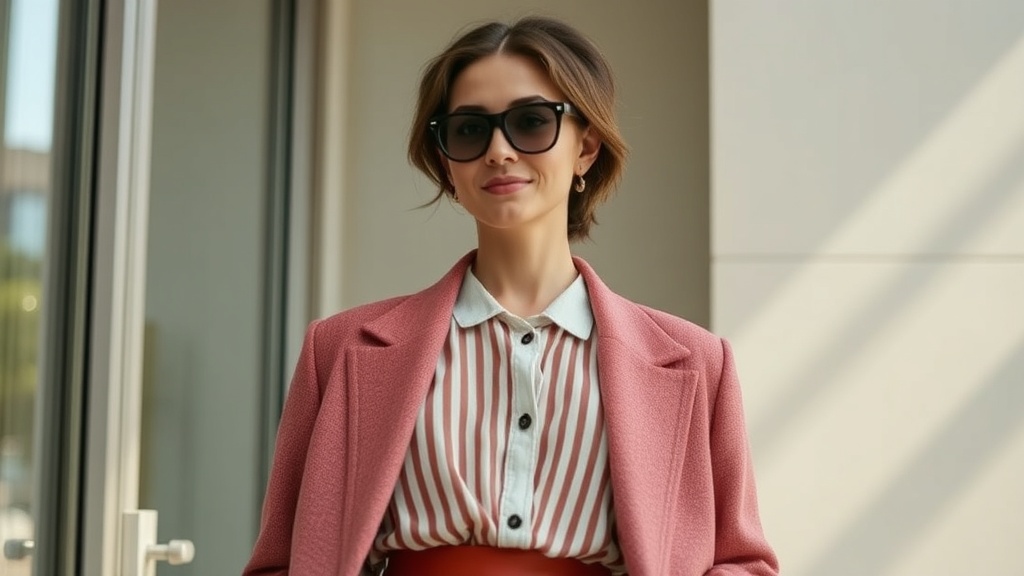
How Do Stylists Make Inexpensive Pieces Look So Expensive? The Proportion Trick Anyone Can Copy
You're standing in front of your closet with a $12 thrifted blazer and a $20 pair of trousers. Separately, they look fine—decent, even. But when you put them together, something's off. The jacket hits at an awkward spot, the pants pool around your ankles, and suddenly you're not channeling "effortless chic" so much as "I got dressed in the dark." This is the proportion problem—and it's the single biggest reason budget outfits fall flat while stylist-assembled looks command attention.
The good news? Proportion isn't about money. It doesn't require designer labels or bespoke tailoring (though tailoring helps). It's about understanding visual balance—the relationship between where garments hit your body, how volume is distributed, and where the eye travels when someone looks at your outfit. Get this right, and that same $32 combination transforms into something that turns heads and invites compliments. Here's how stylists manipulate proportion to make inexpensive pieces look like they came from a high-end boutique.
What Is the Rule of Thirds in Outfit Proportion?
Photographers and artists swear by the rule of thirds—and stylists do too. The concept is simple: an outfit looks most visually pleasing when it divides your body into roughly one-third and two-thirds ratios rather than cutting you in half.
Think about a cropped jacket paired with high-waisted wide-leg pants. The jacket might hit at your natural waist (the top third), while the pants extend from waist to floor (the bottom two-thirds). That asymmetry creates interest, elongates your legs, and avoids the dreaded "cut in half" effect that happens when a hip-length top meets mid-rise pants right at your middle.
Here's how to apply it with budget finds:
- Tuck, always tuck—Even a basic tee looks intentional when tucked into high-waisted bottoms. That simple move creates a defined waist and establishes the one-third/two-thirds ratio instantly.
- Crop without buying cropped—Can't find cropped blazers at the thrift store? Use a hair elastic to gather excess fabric at the back waist, or try the French tuck (half-tuck) technique to create visual cropping without the commitment.
- High-waisted everything—The rise of your pants matters more than the price tag. A $15 pair of high-waisted trousers will always look more expensive than $50 mid-rise pants because the proportions flatter better.
The rule of thirds works across body types and sizes. It's not about hiding or minimizing—it's about creating visual harmony that draws the eye upward and creates length.
How Do Volume and Structure Balance Each Other?
One of the biggest mistakes budget shoppers make is combining oversized with oversized—or fitted with fitted. Both approaches can work, but without intention, they often read as sloppy or boring rather than styled.
The magic formula stylists use: pair volume with structure. If one piece is loose and flowing, anchor it with something more tailored. If you're wearing wide-leg pants (volume), opt for a fitted top or structured blazer. If you're in an oversized button-down (volume), try straight-leg jeans or a sleek pencil skirt.
This principle explains why certain combinations feel expensive even when they're not:
- An oversized thrifted men's blazer ($8) over a fitted ribbed tank ($6) with straight-leg jeans ($20)
- A flowy midi skirt ($15) tucked with a structured, tucked-in button-down ($12)
- Wide-leg trousers ($18) with a fitted turtleneck ($10) and belted at the waist
The contrast between loose and fitted creates shape and intentionality. It signals that you thought about the outfit rather than throwing on whatever was clean. And intention—visible, deliberate choices—is what separates "cheap" from "curated."
"Proportion is the invisible architecture of an outfit. Get it right, and no one asks where you bought it—they just notice how good you look."
Why Does Where Your Clothes Hit Your Body Matter So Much?
Sleeve length, pant breaks, and hemlines aren't arbitrary—they're proportion tools. Stylists obsess over these details because they change how your entire body looks. A sleeve that hits at the wrong spot can make arms look heavier. Pants that puddle at the ankle shorten your legs. A skirt that ends at the widest part of your calf creates imbalance.
The fixes are surprisingly simple and don't require a tailor (though a tailor is worth their weight in gold for certain adjustments):
- Sleeve rolling—A sleeve that hits right at your wrist bone can look dated. Roll it once or twice to hit just above the wrist—this creates a more modern silhouette and shows a hint of forearm, which reads as relaxed confidence.
- The ankle reveal—Whether it's cropped pants, rolled jeans, or a midi skirt with a slit, showing some ankle creates a break that elongates the leg. This is why cropped wide-leg pants look expensive—they hit at exactly the right spot.
- Skirt length strategy—For midi skirts, the sweet spot is between the narrowest part of your calf and just above the ankle bone. Any lower and it drags; any higher and it cuts awkwardly.
These details matter because they control where the eye stops. Strategic breaks and reveals guide attention in flattering ways, creating movement and interest that expensive outfits have mastered.
The Vertical Line Secret
Here's a trick stylists use constantly: create one long, unbroken vertical line through your outfit. This could be a column of color (all black, all navy, all camel), a long open cardigan over a matching base, or a button-down worn open like a jacket over a cohesive underlayer.
The vertical line does two things. First, it elongates your silhouette—always flattering, always chic. Second, it creates a sense of cohesion that reads as expensive. When colors or tones flow uninterrupted from neck to toe, the outfit looks intentional and polished.
You can achieve this with any budget pieces. A $10 black turtleneck, $20 black trousers, and $15 black ankle boots create a column that looks far more expensive than the sum of its parts. Add a third piece—a camel coat, a patterned blazer, a statement scarf—and you have the kind of layered, sophisticated look that turns sidewalks into runways.
How Can You Use Accessories to Fix Proportion Problems?
Sometimes the clothes themselves don't cooperate. Maybe those thrifted trousers are slightly too long, or the blazer shoulders are a touch too wide. Before you dismiss the piece, consider whether accessories can solve the proportion puzzle.
A belt is the most powerful proportion tool in your arsenal. Cinching a loose dress, oversized blazer, or boxy top at the waist instantly creates shape and establishes that critical one-third/two-thirds ratio. Even a $5 thrifted belt transforms the silhouette of an outfit.
Shoes matter enormously for proportion. Pointed-toe flats or heels extend the leg line visually, making pants and skirts look better proportioned. Ankle boots that hit at exactly the right spot can save pants that are slightly too long. And don't underestimate the power of a nude shoe that matches your skin tone—it creates an unbroken line that elongates everything.
Scarves, necklaces, and earrings draw the eye up, creating vertical interest that balances horizontal volume. A long pendant necklace breaks up a solid block of color. Statement earrings draw attention to your face when you're wearing something oversized on top.
The key is thinking of accessories as functional proportion tools, not just decoration. That mindset shift—from "this necklace is pretty" to "this necklace creates a vertical line that elongates my torso"—is what separates fashion enthusiasts from people who simply wear clothes.
Start experimenting with proportion in your own closet. Try tucking everything. Roll some sleeves. Belt an oversized piece. Notice how these small adjustments change how an outfit feels. The best part? These tricks cost nothing—and the confidence they create is absolutely priceless.